Water Extraction in Union, SC
Extraction crews pull standing water out of floors, carpet pad and cabinet bases in Union homes, from mill-village houses to downtown buildings, before the moisture can settle into framing and plaster.
(888) 532-8921Describe the soaked rooms to a crew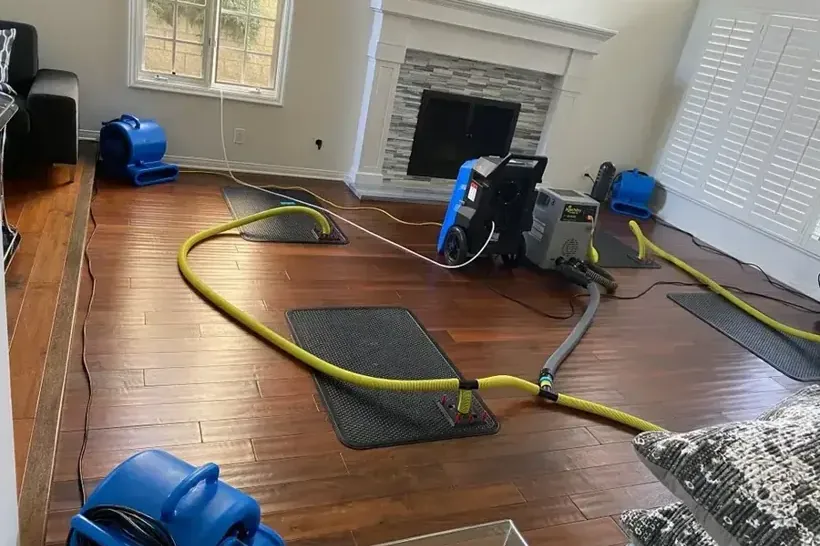
What a proper water extraction and removal job includes
Water damage is a drying problem first. The restoration team measures, extracts and dries to a reading, then records each step so the claim file holds up.
Dispatch at any hour
Active water is treated as urgent around the clock, weekends and holidays included, because drywall and subfloor keep soaking while water sits.
Dried to the IICRC S500 standard
Air movers and LGR dehumidifiers are sized to the class of loss, and materials are dried to within 2 to 4 points of a dry reference.
A claim file from the first visit
Moisture maps, daily psychrometric logs and timestamped photos taken before any demolition go into one file for the adjuster.
Planned for Piedmont houses
Crawl spaces over red clay, older mill houses and manufactured homes each dry differently, so the plan starts from how the house is built.
First steps for water extraction and removal
- Confirm the source
The supply is shut off and the water is judged clean, gray or contaminated.
- Pump and extract
Pumps clear deep water, then wands work across the floor and pad.
- Open hidden spots
Baseboards and toe-kicks come off so trapped water can drain.
- Meter and hand off
Room-by-room readings go to the drying crew as the starting numbers.
What does water extraction and removal cost in Union, SC?
Extraction cost depends on how much water stood, how long it sat and whether it was clean or contaminated. A job caught early in one room lands at the low end, while a whole floor or sewage-tainted water moves to the top.
One room, caught early
- Pump-out and wand pass
- Pad lifted
- Moisture readings
Several rooms or the crawl space
- Deeper pumping
- Trim and toe-kicks removed
- Daily checks
Whole floor or contaminated water
- Containment sheeting
- Contaminated material out
- Extended monitoring
Ranges are typical, not a quote. Water category, square footage, material class and how fast drying started move the number most. Try the water damage cost calculator for a closer range.
How water extraction and removal is handled, step by step
- 1
Assess
Source, water type and wet rooms are mapped first.
- 2
Extract
Pumps and wands remove standing water and wring the pad.
- 3
Open up
Trim and toe-kicks come off so trapped water escapes.
- 4
Verify
Meters mark the wet areas for the drying crew.
Extraction is the first physical step after a leak or flood: get the standing water out before it wicks into wood, plaster and subfloor. Around Union that work often happens inside older houses and downtown buildings, so the extraction crew checks what sits under the top layer of flooring before any pump is switched on.
What the crew removes first
- Standing water, pumped from low spots and pulled across the floor with wand extractors.
- Saturated carpet pad, which holds water long after the carpet looks dry.
- Water trapped behind baseboards and under the toe-kicks of cabinets.
- Loose debris and silt that would block air from reaching the floor.
Standing water on the floor right now? Describe it to a crew and the extraction plan can begin.
(888) 532-8921Speak with the extraction crewOlder finishes change the plan
Union has historic mill-village houses and older downtown buildings, so the surface is rarely the whole story. A floor may sit over an earlier floor, and plaster, thick trim and many coats of paint hold water differently than new drywall. The crew probes, lifts and meters first, then removes only what has to go.
After the water is out
Once the pumps shut off, the job is not finished. Extraction ends with moisture readings on floors and lower walls, and then air movers and dehumidifiers take over. Skipping that handoff is how a floor that looks dry ends up cupping a week later. Read about structural drying in Union, or see the water extraction service overview for the full process.
Water extraction and removal across Union and nearby towns
Extraction crews cover ZIP 29379, including the East Main Street area, Douglass Heights and the mill-village streets around Buffalo, and work through whatever sits under the flooring in each older home.
The same service nearby: water extraction and removal in Gaffney, Spartanburg, Kings Mountain.
Related water damage services in Union
Common questions about water extraction and removal
How quickly should standing water be removed?
As soon as it is safe. Water wicks into pad, wood and drywall quickly, and mold can start in a day or two, so waiting only lengthens the repair list.
Can wet carpet be saved after extraction?
When the water was clean, often the carpet can, but the pad usually cannot. Pad holds water like a sponge and is cheap to replace, so the crew lifts it and dries the carpet and subfloor.
Does extraction work on contaminated water?
Yes, with changes. Contaminated water is contained, removed with dedicated equipment, and porous materials it touched are cut out. See sewage backup cleanup for that process.
What happens to older flooring in a mill-village house?
The crew first checks how many layers are down and what is under them. Solid wood can sometimes be dried in place, while glued or layered floors may need to come up so the subfloor can breathe.
Do I need to move furniture first?
Move small items and lift furniture legs off wet carpet if it is safe. Heavy pieces can stay, and the extraction crew works around them or moves them with care.
How is extraction different from drying?
Extraction removes liquid water, while drying removes the moisture held inside materials. The numbers from the first stage steer the second, so one job often uses both.
Standing water in Union needs a pump, not a towel
Pumps, wands and moisture meters start the dry-out, and the sooner the water leaves, the less of the house must come out.
(888) 532-8921Send a pump crew