Water Extraction and Removal in Spartanburg, SC
Creek overflow, a failed appliance or hard rain can leave a floor under standing water. The extraction crew pumps it out, then the drying team clears moisture from the floor, walls and carpet pad.
(888) 532-8921Describe the pooled water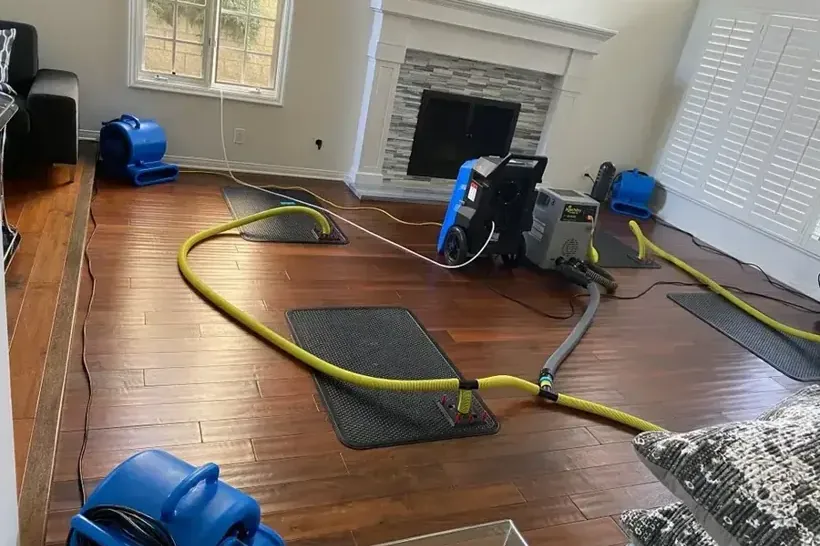
What a proper water extraction and removal job includes
Water damage is a drying problem first. The restoration team measures, extracts and dries to a reading, then records each step so the claim file holds up.
Dispatch at any hour
Active water is treated as urgent around the clock, weekends and holidays included, because drywall and subfloor keep soaking while water sits.
Dried to the IICRC S500 standard
Air movers and LGR dehumidifiers are sized to the class of loss, and materials are dried to within 2 to 4 points of a dry reference.
A claim file from the first visit
Moisture maps, daily psychrometric logs and timestamped photos taken before any demolition go into one file for the adjuster.
Planned for Piedmont houses
Crawl spaces over red clay, older mill houses and manufactured homes each dry differently, so the plan starts from how the house is built.
First steps for water extraction and removal
- Stop the source
Close the fixture or main valve, and stay clear of wet outlets.
- Lift what you can
Raise small furniture, rugs and electronics out of the water.
- Photograph the damage
Take wide shots of each room and close shots of the water level.
- Hold off on cleanup
Do not scrub, vacuum or throw anything out until photos exist.
What does water extraction and removal cost in Spartanburg, SC?
Water extraction in Spartanburg usually runs $1,200 to $15,000 or more, depending on how many rooms are wet, whether the water is clean or contaminated and how long it sat before the pumps started.
One room, caught early
- Water pumped out
- Carpet pad checked
- Drying equipment set
Several rooms or the crawl space
- Wet baseboards removed
- Floor and pad lifted
- Dehumidifiers running
Whole floor or contaminated water
- Porous materials removed
- Surfaces treated
- Extended drying time
Ranges are typical, not a quote. Water category, square footage, material class and how fast drying started move the number most. Try the water damage cost calculator for a closer range.
How water extraction and removal is handled, step by step
- 1
Assess
Meters map where the water traveled
- 2
Pump and extract
Pumps and wands remove standing water from every room
- 3
Dry the structure
Air movers and dehumidifiers run on floors and walls
- 4
Confirm dry
Readings must match dry areas before equipment leaves
Standing water gives the wood, drywall and padding nothing to do but soak it up. The extraction crew pulls the water out first, because the longer it sits the further it travels into baseboards and under flooring. Spartanburg averages 51.3 inches of precipitation a year, spread fairly evenly through the seasons, so a wet floor can show up in any month, not only after a named storm.
What the crew does with the water
- Pumps clear deep water from rooms and garages
- Extraction wands pull water out of carpet, pad and hard floors
- Wet baseboards and low drywall are checked and opened if needed
- Furniture is lifted onto blocks so legs stop wicking water
Water still standing in the house? Describe it to the extraction crew.
(888) 532-8921Talk to the pump crewWhen creek water reaches the house
Lawson's Fork Creek lies entirely within the county, and NOAA's storm records show it spilling over onto residential streets and at least one private drive. Water that comes from a creek is treated as contaminated, so carpet and pad it touched are usually removed rather than dried in place, and the crew sorts out what can stay. Clean supply water from a failed fixture is far easier to save.
What comes next
Pulling the standing water is the first stage, not the finish. Wet subfloor, framing and drywall still hold moisture, so the drying team places air movers and dehumidifiers and returns with meters to confirm the readings. See structural drying for how that stage runs, or storm and flash flood cleanup when runoff was involved. Skipping that step is how a dry looking floor ends up with damp walls a week later.
Water extraction and removal across Spartanburg and nearby towns
The extraction crew covers homes and businesses across Spartanburg, from the blocks around Morgan Square to Northside near Butterfly Creek and the mill village at Beaumont Village, with pumps loaded for creek water as well as plumbing leaks.
The same service nearby: water extraction and removal in Gaffney, Union, Forest City.
Water damage restoration in Spartanburg · every town covered
Related water damage services in Spartanburg
Common questions about water extraction and removal
How long can standing water sit before damage spreads?
Water starts wicking into drywall and baseboards almost at once, and wood floors can begin to cup within a day or two. Mold becomes a concern after 24 to 48 hours, which is why pumping comes first.
Can I use a wet vacuum myself?
A household or shop vacuum can handle a small spill, but deep water, wet outlets or sewage call for proper pumps. A shock risk is real wherever water reaches cords, outlets or appliances.
Is creek water different from a plumbing leak?
Yes. Creek and runoff water carry silt and bacteria, so it is treated as contaminated and porous materials are usually removed. A clean supply pipe leak is often dried in place if it is caught early.
Will the carpet and pad have to go?
Pad is usually replaced after any soaking because it holds water and dries slowly. Carpet itself can sometimes be lifted, dried and reinstalled when the water was clean and the response was prompt.
Does extraction include drying the walls?
Extraction removes the water you can see. Walls, subfloors and insulation hold moisture that stays behind, so drying with air movers and dehumidifiers normally follows, along with meter readings to confirm it.
What should go in the insurance file?
Photos of the water level before pumping, the date it was noticed, moisture readings and a list of damaged belongings. Receipts for emergency work help too, and the cost calculator gives a rough range.
Soaked floor? Get the water out and the drying started.
Pumps, wands and dehumidifiers handle the standing water, then readings show when the structure is truly dry. Photos and notes go into the claim file.
(888) 532-8921Pump the water out