Water Extraction and Removal in Gaffney, SC
Standing water keeps soaking into pad, subfloor and drywall while it sits. The extraction crew pulls it out with truck-mounted and portable units, then sets the drying equipment and logs the first readings.
(888) 532-8921Standing water in a room? Get it pulled out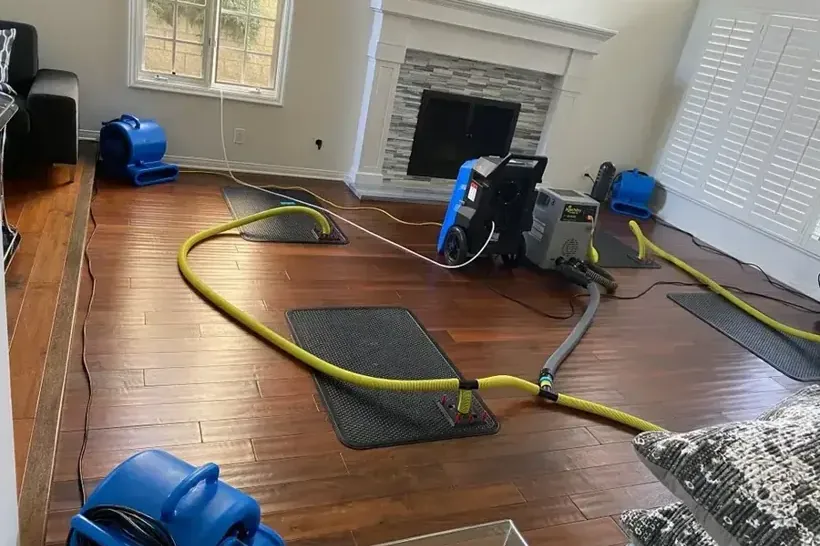
What a proper water extraction and removal job includes
Water damage is a drying problem first. The restoration team measures, extracts and dries to a reading, then records each step so the claim file holds up.
Dispatch at any hour
Active water is treated as urgent around the clock, weekends and holidays included, because drywall and subfloor keep soaking while water sits.
Dried to the IICRC S500 standard
Air movers and LGR dehumidifiers are sized to the class of loss, and materials are dried to within 2 to 4 points of a dry reference.
A claim file from the first visit
Moisture maps, daily psychrometric logs and timestamped photos taken before any demolition go into one file for the adjuster.
Planned for Piedmont houses
Crawl spaces over red clay, older mill houses and manufactured homes each dry differently, so the plan starts from how the house is built.
First steps for water extraction and removal
- Stop the source
Close the main shutoff or the fixture valve, and switch off a well pump.
- Cut power to wet rooms
Turn off breakers for wet areas if the panel is dry.
- Lift what you can
Move rugs, boxes and furniture legs off wet carpet.
- Photograph first
Record the water level and damaged items before moving them.
What does water extraction and removal cost in Gaffney, SC?
In Gaffney, SC, water extraction and the drying that follows typically run $1,200 to $15,000, depending on how many rooms are wet, the category of water, whether the crawl space took water and how long it sat before extraction started.
One room, caught early
- Carpet and pad extracted
- Air movers and a dehumidifier
- Daily readings
Several rooms or the crawl space
- Weighted pad extraction
- Crawl space pumped out
- Baseboards off for drying
Whole floor or contaminated water
- Pad and drywall removed
- Containment
- Extended monitoring
Ranges are typical, not a quote. Water category, square footage, material class and how fast drying started move the number most. Try the water damage cost calculator for a closer range.
How water extraction and removal is handled, step by step
- 1
Find the source
Confirm it is stopped and set the water category.
- 2
Extract
Truck-mounted and portable units pull the water.
- 3
Dry
Air movers and LGR dehumidifiers set to the class.
- 4
Verify
Daily readings until materials match a dry reference.
Water extraction is the first and cheapest part of any dry-out. Every gallon pulled out as liquid is a gallon the dehumidifiers never have to pull out of the air. In Gaffney, extraction often happens twice: once in the rooms, and once in the crawl space under them, where water that ran through the floor collects on the clay.
What gets extracted
Carpet and pad are extracted with weighted tools that squeeze water out of the pad, not just the surface. Hardwood and laminate get surface extraction and drying mats. Tile and vinyl are squeegeed and extracted at the grout lines and seams.
- Truck-mounted units for large losses and deep pad
- Portable extractors for upstairs rooms and tight spaces
- Submersible pumps for standing water in a crawl space
- Wet vacuums only for the last film on hard floors
Water sitting on the floor? The extraction crew pulls it out 24/7.
(888) 532-8921Book a water extraction visitWhy speed matters
Clean water from a supply line starts as Category 1, but it picks up contaminants from carpet backing, soil and building materials as it sits. After a day or two it can degrade to Category 2, which means pad comes out instead of being dried. Drywall wicks water upward over the same hours. The Ready.gov flood safety page covers staying safe around standing water and power.
After the water is out
Extraction only removes the liquid. The drying team then sets air movers and LGR dehumidifiers to the class of loss and takes readings in the same spots each day. Equipment stays until those readings reach 2 to 4 points of a dry reference. A quick meter check, explained on the EPA WaterSense leak page, confirms the source is stopped.
Water extraction and removal across Gaffney and Cherokee County
Coverage runs across ZIP 29340, 29341 and 29342, from downtown and Limestone Street to Granard Street, the Limestone University area, the older mill-village streets and the homes along US 29, SC 11 and SC 18.
Nearby coverage reaches Blacksburg, Cowpens, Chesnee, Grassy Pond, Cherokee Falls, Thicketty, Spartanburg, Shelby.
Related water damage services
Common questions about water extraction and removal
How long does water extraction take?
Extraction itself usually takes a few hours for a few rooms. The drying that follows takes three to five days for a typical clean-water loss, longer for hardwood or a wet crawl space.
Can wet carpet be saved after extraction?
Often, if the water was clean and extraction started quickly. Pad soaked with gray or black water comes out, and carpet soaked by sewage or storm runoff is removed.
Does water extraction include the crawl space?
It should whenever water ran through the floor. Standing water under the house is pumped out with submersible pumps, and wet insulation is removed so the joists can dry.
Why not just use a shop vacuum for water extraction?
A shop vacuum lifts the surface film but leaves the pad, subfloor and wall bottoms wet. Weighted extraction and dehumidification pull water out of the materials, which is what prevents warping and odor.
Is water extraction covered by insurance?
When the water comes from a sudden event like a split supply line, extraction is often part of a covered claim. Rising flood water is treated differently. Coverage depends on your policy, so check with your own insurer.
What does water extraction and removal cost?
Most jobs fall between $1,200 and $15,000. Clean water caught early sits at the low end; contaminated water, several rooms or a flooded crawl space push it higher.
Standing water in the house? Start the extraction now.
Every hour water sits it soaks deeper into pad, subfloor and drywall. The extraction crew pulls it and sets the drying.
(888) 532-8921Get the standing water out