Water Extraction and Removal in Kings Mountain, NC
Heavy rain, a failed pipe or an overflowing appliance can leave inches of water across a floor. The extraction crew pumps it out, lifts soaked pad and starts drying before damage reaches the walls.
(888) 532-8921Floor under water? Call for the pumps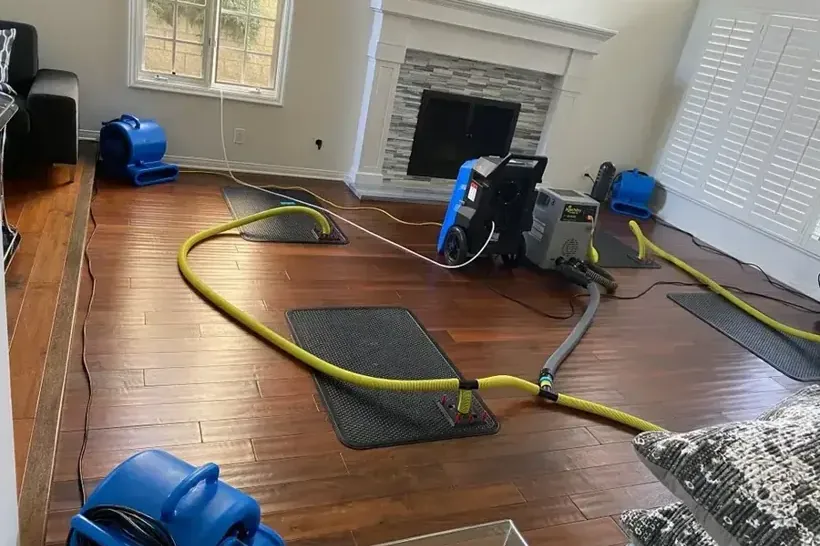
What a proper water extraction and removal job includes
Water damage is a drying problem first. The restoration team measures, extracts and dries to a reading, then records each step so the claim file holds up.
Dispatch at any hour
Active water is treated as urgent around the clock, weekends and holidays included, because drywall and subfloor keep soaking while water sits.
Dried to the IICRC S500 standard
Air movers and LGR dehumidifiers are sized to the class of loss, and materials are dried to within 2 to 4 points of a dry reference.
A claim file from the first visit
Moisture maps, daily psychrometric logs and timestamped photos taken before any demolition go into one file for the adjuster.
Planned for Piedmont houses
Crawl spaces over red clay, older mill houses and manufactured homes each dry differently, so the plan starts from how the house is built.
First steps for water extraction and removal
- Stop the source
Close the main valve or the appliance shutoff so no more water reaches the floor.
- Mind the power
Switch off breakers for wet rooms and stay out of standing water near cords.
- Lift what you can
Raise rugs, small furniture and electronics onto dry ground.
- Take photos
Photograph the water and damaged items before anything is moved.
What does water extraction and removal cost in Kings Mountain, SC?
In Kings Mountain, water extraction usually costs between $1,200 and $15,000 or more. Rooms affected, the depth of the water, how long it sat and whether it is clean, storm or sewage water set where a job lands.
One room, caught early
- Standing water pumped
- Wet pad removed
- Equipment set up
Several rooms or the crawl space
- Wider pump-out
- Baseboards checked
- Several days of drying
Whole floor or contaminated water
- Protective gear used
- Porous materials torn out
- Drying and disinfection
Ranges are typical, not a quote. Water category, square footage, material class and how fast drying started move the number most. Try the water damage cost calculator for a closer range.
How water extraction and removal is handled, step by step
- 1
Extract
Pumps and wet vacuums clear the deep water and the thin film.
- 2
Lift
Soaked pad, loose debris and damaged baseboards come out.
- 3
Dry
Air movers and dehumidifiers are placed by moisture readings.
- 4
Verify
Meter readings confirm each wet area has dried out.
Standing water does not stay on the surface for long. It wicks into baseboards, drywall and the pad under carpet, and each day it sits adds to the tear-out. Cleveland County sees rain totals near 48 inches in a typical year, so water on a floor is a familiar call. The extraction crew pulls the bulk of it first, then maps what stayed wet.
What the extraction crew does
- Submersible pumps clear water deep enough to move through a hose.
- Wet vacuums pick up the thin film left on tile, vinyl and hardwood.
- Soaked carpet pad is cut out and bagged, because it holds water like a sponge.
- Furniture and contents are lifted onto blocks so they stop wicking moisture.
Standing water in a room or crawl space? Say what happened and the crew builds the plan.
(888) 532-8921Talk to the pump crewWhy drying follows right away
Once the surface water is gone, the structure still holds moisture. Subfloor, wall bottoms and baseboards are read with a meter, and air movers and dehumidifiers go where the numbers run high. Damp drywall left for a day or two can grow mold, so the drying plan is set before the crew leaves.
Storm water or pipe water
On December 30, 2015, a flash flood warning covered much of the day across the county, and local coverage said Kings Mountain took the brunt of the flooding. Clean supply water, rain runoff and sewage are handled differently, so the crew sorts that out before pumping. Contaminated water follows the sewage cleanup process, and wet framing moves on to structural drying.
Water extraction and removal across Kings Mountain and nearby towns
Extraction work in Kings Mountain covers ZIP code 28086, including the Central School Historic District and the West End Historic District, the Margrace Mill Village area and homes and buildings along the Interstate 85 corridor.
The same service nearby: water extraction and removal in Gaffney, Shelby, Forest City.
Water damage restoration in Kings Mountain · every town covered
Related water damage services in Kings Mountain
Common questions about water extraction and removal
How long does water extraction take?
Pumping a single room often finishes in one visit, while a flooded floor or crawl space can take longer. The wet vacuum pass and pad removal come right after the pump-out.
Can wet carpet be saved after extraction?
Often yes if the water was clean and the carpet dries quickly, but the pad underneath is usually thrown out because it holds water. Sewage or storm water means carpet is replaced.
Why use pumps instead of towels and fans?
Towels and fans leave water in the subfloor and wall bottoms. Pumps and wet vacuums remove it by volume, and meters show what is still wet so drying can finish the job.
Does storm water change how extraction is done?
Yes. Storm runoff carries mud and bacteria, so the crew treats it as contaminated, removes soaked porous materials and cleans the area. See storm and flash flood cleanup.
What does extraction usually cost?
Most jobs fall between $1,200 and $15,000 or more, depending on how many rooms are wet and how long the water sat. A small clean leak sits at the low end.
Does insurance usually pay for water extraction?
A sudden break or appliance failure is often covered, while rising flood water usually needs separate flood coverage. The policy wording decides, so keep photos and receipts.
Water covering the floor? Get it pumped out
Standing water pulls moisture into the floor and walls the longer it stays. The extraction crew removes it and then checks every wet surface.
(888) 532-8921Get the water pumped out