Structural Drying and Dehumidification in Union, SC
Older mill-village houses and historic downtown buildings call for careful moisture checks in framing and finishes. The drying team sets air movers and dehumidifiers, reads the material at every visit and stops only at dry numbers.
(888) 532-8921Set up a drying plan with a crew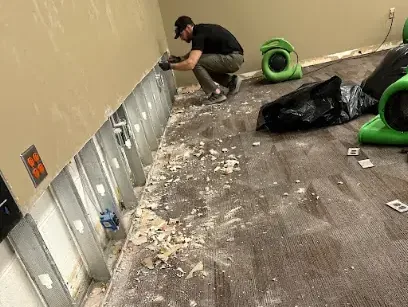
What a proper structural drying and dehumidification job includes
Water damage is a drying problem first. The restoration team measures, extracts and dries to a reading, then records each step so the claim file holds up.
Dispatch at any hour
Active water is treated as urgent around the clock, weekends and holidays included, because drywall and subfloor keep soaking while water sits.
Dried to the IICRC S500 standard
Air movers and LGR dehumidifiers are sized to the class of loss, and materials are dried to within 2 to 4 points of a dry reference.
A claim file from the first visit
Moisture maps, daily psychrometric logs and timestamped photos taken before any demolition go into one file for the adjuster.
Planned for Piedmont houses
Crawl spaces over red clay, older mill houses and manufactured homes each dry differently, so the plan starts from how the house is built.
First steps for structural drying and dehumidification
- Set a baseline
Meters read dry reference spots so the crew knows the target.
- Place the equipment
Air movers and dehumidifiers are sized to the class of water and the room.
- Read every visit
Moisture is checked at the same spots and the equipment is adjusted.
- Stop at dry
Gear is pulled only when each material matches its dry reading.
What does structural drying and dehumidification cost in Union, SC?
Drying cost follows the class of water, the number of rooms and how long the equipment must run. A small area with limited moisture sits at the low end, while deeply saturated material or a whole wet floor needs more equipment and reaches the top.
Class 1 or 2, one area
- Air movers placed
- One dehumidifier
- Daily readings
Class 3, several rooms
- Several air movers
- Larger dehumidifier
- Written drying log
Class 4 or a whole floor
- Specialty drying
- Extended run time
- Final clearance readings
Ranges are typical, not a quote. Water category, square footage, material class and how fast drying started move the number most. Try the water damage cost calculator for a closer range.
How structural drying and dehumidification is handled, step by step
- 1
Baseline
Dry reference readings set the target.
- 2
Place
Equipment is sized to the water class.
- 3
Monitor
Readings are taken at the same spots daily.
- 4
Release
Gear comes out when readings match dry.
Structural drying is the long middle of a water job. Once the standing water is gone, the building is still full of moisture, and controlled airflow and humidity removal are what actually bring wood, plaster and drywall back to normal. Moisture hides in wood, plaster and insulation where it cannot be seen, which is why meters and a written log matter more than how a wall looks or feels.
Older buildings need patience
The Buffalo Mill Historic District holds about 190 contributing buildings from the mill era, and downtown has its own older structures, so older framing and finishes are routine here. The crew meters instead of assuming, and each reading decides whether equipment stays, moves or goes.
Water gone but the walls still damp? Describe the rooms to a crew and learn what the drying targets will be.
(888) 532-8921Discuss drying with a crewHow drying classes work
- Class 1 and 2: limited or moderate water, with little absorbed by dense material.
- Class 3: water from above that soaked ceilings, walls, insulation and floors.
- Class 4: deeply saturated dense material such as hardwood, plaster or concrete.
- Higher classes need more dehumidifier capacity and longer run times.
Knowing when it is dry
Equipment stays until readings match dry reference spots in the same building. The drying log goes to the homeowner and adjuster. A building called dry too early often shows cupped floors, swollen trim or musty odors a few weeks later. Related pages: water extraction, and the structural drying overview.
Structural drying and dehumidification across Union and nearby towns
Drying work covers ZIP 29379, including the Buffalo Mill Historic District, the East Main Street-Douglass Heights Historic District and the older streets around downtown, Excelsior and Monarch, with equipment sized to each building.
The same service nearby: structural drying and dehumidification in Gaffney, Spartanburg, Kings Mountain.
Related water damage services in Union
Common questions about structural drying and dehumidification
How long does structural drying take?
It depends on the class of water and the materials, but drying is judged by readings rather than a calendar. Equipment stays until every wet material matches its dry reference.
Why are air movers and dehumidifiers both needed?
Air movers lift moisture out of wet surfaces, and dehumidifiers pull it out of the air. Without both, the moisture simply settles back into the structure.
Can drying happen with the walls closed?
Sometimes, through small openings that let dry air circulate through the cavity. If readings stay wet, the crew opens more so the framing can dry.
Do older plaster walls dry differently?
Plaster, thick trim and layered finishes can hold moisture longer than newer drywall, so the crew reads them closely and often adds time. See water extraction for the step before drying.
What is in the drying log?
Dated readings for each wet material, the equipment placed and any changes made on each visit. The log gives the homeowner and adjuster a clear record that the structure reached dry.
A building is not dry until the meters say so
Air movers, dehumidifiers and daily readings finish what extraction starts. Call and describe the rooms that got wet.
(888) 532-8921Plan the dry-out