Ceiling Leak Water Damage in Gaffney, SC
A leaking toilet seal, shower pan, supply line or air handler upstairs sends water across the ceiling below. The restoration team finds where it comes from, opens wet drywall safely and dries the joist bays.
(888) 532-8921Ceiling stained or sagging? Call to have it dried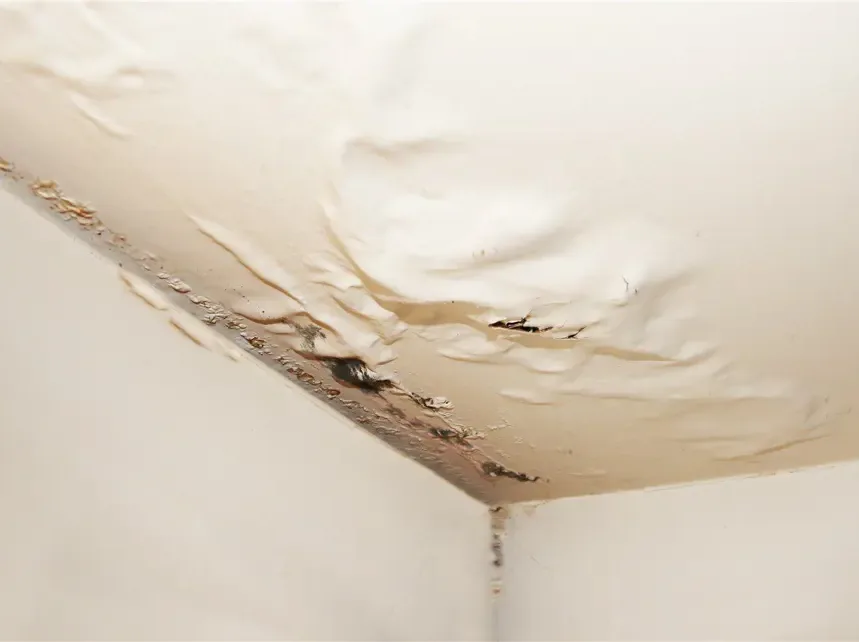
What a proper ceiling leak water damage job includes
Water damage is a drying problem first. The restoration team measures, extracts and dries to a reading, then records each step so the claim file holds up.
Dispatch at any hour
Active water is treated as urgent around the clock, weekends and holidays included, because drywall and subfloor keep soaking while water sits.
Dried to the IICRC S500 standard
Air movers and LGR dehumidifiers are sized to the class of loss, and materials are dried to within 2 to 4 points of a dry reference.
A claim file from the first visit
Moisture maps, daily psychrometric logs and timestamped photos taken before any demolition go into one file for the adjuster.
Planned for Piedmont houses
Crawl spaces over red clay, older mill houses and manufactured homes each dry differently, so the plan starts from how the house is built.
First steps for ceiling leak water damage
- Shut off the fixture
Close the toilet or sink valve, or the main if unsure.
- Turn off the air handler
If water comes from the HVAC closet, switch the system off.
- Stand clear of a bulge
Move furniture and stay out from under a sagging spot.
- Cut power to wet fixtures
Switch off breakers for wet lights and fans.
What does ceiling leak water damage cost in Gaffney, SC?
In Gaffney, SC, ceiling leak water damage typically runs $800 to $12,000, depending on the source, how far the water spread along the joists, how much drywall and insulation has to come out and whether walls and flooring below got wet.
Small stain, caught early
- Leak traced
- Ceiling dried in place
- Daily readings
Ceiling opened
- Sagging drywall removed
- Insulation pulled
- Joist bays dried
Ceiling, walls and floor below
- Several rooms
- Flooring dried
- Extended monitoring
Ranges are typical, not a quote. Water category, square footage, material class and how fast drying started move the number most. Try the water damage cost calculator for a closer range.
How ceiling leak water damage is handled, step by step
- 1
Trace
Thermal imaging follows the water to its source.
- 2
Open
Wet drywall and insulation removed safely.
- 3
Dry
Joist bays dried with air movers and dehumidifiers.
- 4
Verify
Readings until the framing is dry.
Ceiling leaks that are not from the roof usually come from a bathroom or a mechanical closet above. In Gaffney's two-story homes, the apartments over downtown storefronts and the newer houses near Interstate 85, the usual sources are a failed wax ring, a cracked shower pan, a supply line to a toilet or sink, and the condensate drain from an attic or upstairs air handler in humid summers.
Signs the leak is from above
- A stain under a bathroom that grows after showers or flushing
- Drips from a light fixture or a ceiling fan
- Bubbled paint or a soft, sagging spot in the drywall
- Water near an upstairs air handler or its drain line
Water coming through the ceiling? The restoration team traces and dries it 24/7.
(888) 532-8921Book a ceiling leak checkHow the ceiling is dried
The tech traces the water with thermal imaging and meters, because water travels along joists before it drips. Sagging drywall is opened in a controlled way to release trapped water. Wet insulation above it comes out. Air movers and dehumidifiers dry the joist bays, and a drying mat or small vents can dry a ceiling that stays intact. Readings decide when the work is done.
Repairs and paperwork
A plumber or HVAC tech fixes the source; the restoration team handles the water and the wet materials. The meter test on the EPA WaterSense leak page helps confirm the source is stopped. The claim file holds the moisture map, readings and photos, and the South Carolina Department of Insurance explains claim questions.
Ceiling leak water damage across Gaffney and Cherokee County
Coverage runs across ZIP 29340, 29341 and 29342, from downtown and Limestone Street to Granard Street, the Limestone University area, the older mill-village streets and the homes along US 29, SC 11 and SC 18.
Nearby coverage reaches Blacksburg, Cowpens, Chesnee, Grassy Pond, Cherokee Falls, Thicketty, Spartanburg, Shelby.
Related water damage services
Common questions about ceiling leak water damage
Can a stained ceiling be dried without cutting it?
Often, if the drywall is still firm and the water was clean. Drying mats or small vent holes let air into the cavity. Sagging or soft drywall is opened.
How do I tell a roof leak from a plumbing ceiling leak?
A plumbing leak follows water use, such as showers or flushing, and shows up in dry weather. A roof leak follows rain. Thermal imaging and a look in the attic usually settle it.
Why did the air conditioner leak through the ceiling?
Upstairs and attic air handlers make a lot of water in humid summers. A clogged condensate drain or a cracked drain pan sends it into the ceiling below.
How long does it take to dry a ceiling after a leak?
Three to five days for most clean-water leaks. Plaster ceilings and water that spread across several joist bays take longer.
Is ceiling leak water damage covered by insurance?
Sudden leaks are often covered; slow seepage around a toilet or shower over months often is not. Check your own policy.
What does ceiling leak water damage cost?
Most jobs fall between $800 and $12,000. A small stain dried in place sits at the low end; an opened ceiling with wet walls and flooring below pushes it higher.
Ceiling soaked from upstairs? Get it dried properly.
Water runs along joists before it drips, so the wet area is bigger than the stain. The restoration team maps it and dries it.
(888) 532-8921Have the ceiling dried out