Structural Drying and Dehumidification in Gaffney, SC
Structural drying pulls water out of framing, subfloor, sheathing and plaster, not just the surface. The drying team sizes air movers and LGR dehumidifiers to the class of loss and logs readings until the materials are dry.
(888) 532-8921Need the framing dried right? Call the team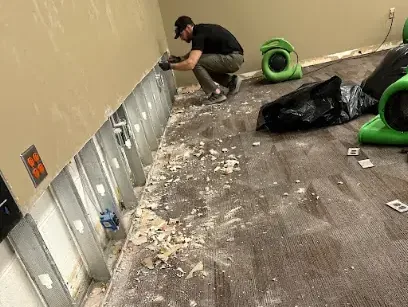
What a proper structural drying and dehumidification job includes
Water damage is a drying problem first. The restoration team measures, extracts and dries to a reading, then records each step so the claim file holds up.
Dispatch at any hour
Active water is treated as urgent around the clock, weekends and holidays included, because drywall and subfloor keep soaking while water sits.
Dried to the IICRC S500 standard
Air movers and LGR dehumidifiers are sized to the class of loss, and materials are dried to within 2 to 4 points of a dry reference.
A claim file from the first visit
Moisture maps, daily psychrometric logs and timestamped photos taken before any demolition go into one file for the adjuster.
Planned for Piedmont houses
Crawl spaces over red clay, older mill houses and manufactured homes each dry differently, so the plan starts from how the house is built.
First steps for structural drying and dehumidification
- Keep the heat or air on
Run the HVAC at a normal setting unless water reached the ductwork.
- Do not close up walls
Leave opened walls and floors open until readings say dry.
- Keep wet-room doors closed
Containment works only if the drying area stays sealed.
- Leave equipment running
Turning it off at night adds days to the job.
What does structural drying and dehumidification cost in Gaffney, SC?
In Gaffney, SC, structural drying and dehumidification typically run $1,200 to $15,000, depending on the class of loss, how many rooms and how much of the crawl space are wet, whether hardwood and plaster are involved and how many days of equipment it takes.
Class 1 or 2, one area
- Air movers and a dehumidifier
- 3 to 4 days
- Daily readings
Class 3, several rooms
- Containment
- Several LGR units
- Cavity drying
Class 4 or a whole floor
- Hardwood and plaster
- Drying mats
- Extended monitoring
Ranges are typical, not a quote. Water category, square footage, material class and how fast drying started move the number most. Try the water damage cost calculator for a closer range.
How structural drying and dehumidification is handled, step by step
- 1
Map and class
Moisture map and class of loss set.
- 2
Place equipment
Air movers and LGR dehumidifiers sized to the class.
- 3
Log daily
Psychrometric and material readings recorded.
- 4
Verify dry
Equipment out at the dry reference.
Every water loss in Gaffney ends with structural drying. Once the standing water is out and anything contaminated has been removed, what is left is water inside the wood, drywall, plaster and subfloor. Humid Upstate summers make this harder, because damp outside air slows evaporation. Drying is planned around the class of loss and checked against a dry reference, not finished on a set day.
How the drying plan is set
The tech maps moisture in every wet room and the crawl space, then sets the class of loss from 1 to 4. That class decides how many air movers and how much dehumidifier capacity go in. Containment with plastic sheeting keeps the drying focused, and the HVAC settings are adjusted so the house helps instead of fighting the equipment.
Materials still wet after a leak? The drying team sets equipment 24/7.
(888) 532-8921Book a structural drying setupWhat gets logged every day
- Temperature and relative humidity inside and outside the containment
- Grains per pound, the measure of water in the air
- Readings in the same spots on framing, drywall and subfloor
- Equipment moved or removed as each area dries
Equipment comes out only when materials read within 2 to 4 points of a dry reference in the same house.
Dense materials and old houses
Hardwood strip floors, plaster and lath in older homes and heavy framing in mill houses release water slowly. They may need drying mats, targeted air or more days. The National Weather Service Greenville-Spartanburg office tracks the humid spells that slow drying, and the Ready.gov flood page covers safe re-entry after water damage.
Structural drying and dehumidification across Gaffney and Cherokee County
Coverage runs across ZIP 29340, 29341 and 29342, from downtown and Limestone Street to Granard Street, the Limestone University area, the older mill-village streets and the homes along US 29, SC 11 and SC 18.
Nearby coverage reaches Blacksburg, Cowpens, Chesnee, Grassy Pond, Cherokee Falls, Thicketty, Spartanburg, Shelby.
Related water damage services
Common questions about structural drying and dehumidification
What is the difference between structural drying and drying with fans?
Fans move air across a surface. Structural drying pairs air movers with LGR dehumidifiers sized to the loss, measures water in the air and the materials daily and stops only at a dry reference.
Why is structural drying equipment so loud and warm?
Air movers and dehumidifiers work by moving and warming air, which speeds evaporation. The noise and heat are part of how drying works.
Can the drying equipment be turned off at night?
It should not be. Drying stops when the equipment stops, and turning it off adds days.
What does a class of loss mean?
It describes how much water the materials absorbed, from Class 1 with little water to Class 4 with dense, deeply soaked materials like hardwood and plaster.
Does insurance pay for structural drying?
When the water damage itself is covered, the drying is usually part of the claim. The daily logs show why each piece of equipment was there. Check your own policy.
What does structural drying and dehumidification cost?
Most jobs fall between $1,200 and $15,000. A Class 1 area dries quickly and costs less; Class 4 materials and whole floors take more equipment and days.
Walls and floors still wet? Get them dried to a reading.
Water inside framing, subfloor and plaster stays long after surfaces feel dry. The drying team measures and dries it.
(888) 532-8921Set up the structural drying