Structural Drying and Dehumidification in Spartanburg, SC
Once the standing water is gone, the building still holds moisture in its studs, subfloor and plaster. The drying team sets air movers and dehumidifiers by the readings and returns until every wet surface matches the dry ones.
(888) 532-8921Call to start the drying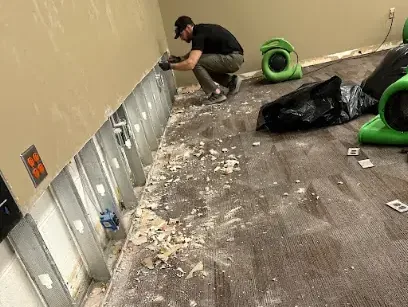
What a proper structural drying and dehumidification job includes
Water damage is a drying problem first. The restoration team measures, extracts and dries to a reading, then records each step so the claim file holds up.
Dispatch at any hour
Active water is treated as urgent around the clock, weekends and holidays included, because drywall and subfloor keep soaking while water sits.
Dried to the IICRC S500 standard
Air movers and LGR dehumidifiers are sized to the class of loss, and materials are dried to within 2 to 4 points of a dry reference.
A claim file from the first visit
Moisture maps, daily psychrometric logs and timestamped photos taken before any demolition go into one file for the adjuster.
Planned for Piedmont houses
Crawl spaces over red clay, older mill houses and manufactured homes each dry differently, so the plan starts from how the house is built.
First steps for structural drying and dehumidification
- Stop and remove water
Drying starts only after the source is stopped and standing water is out.
- Keep the space closed
Close windows and doors in the wet area so dehumidifiers can work.
- Leave equipment running
Do not unplug or move air movers or dehumidifiers between visits.
- Keep a log
Note the date and room for each piece of equipment and any odd smells.
What does structural drying and dehumidification cost in Spartanburg, SC?
Structural drying in Spartanburg usually costs $1,200 to $15,000 or more. A single area in a lower class costs the least, while a higher class job with soaked framing or an entire floor needs more equipment, more days and more readings.
Class 1 or 2, one area
- Air movers placed
- Dehumidifier running
- Readings logged
Class 3, several rooms
- Wall cavities opened
- More equipment
- Daily moisture checks
Class 4 or a whole floor
- Deep materials dried
- Specialty drying
- Extended equipment time
Ranges are typical, not a quote. Water category, square footage, material class and how fast drying started move the number most. Try the water damage cost calculator for a closer range.
How structural drying and dehumidification is handled, step by step
- 1
Map
Meters and imaging show every wet area
- 2
Set
Air movers and dehumidifiers are sized to the room
- 3
Monitor
Readings are logged at each visit
- 4
Confirm
Equipment leaves when wet areas match dry ones
Drying is a measured process, not a matter of running fans until the room feels dry. Moisture hides inside studs, subfloor and plaster, and older construction holds it longer. The oldest existing buildings on Morgan Square date to the 1880s, and Hampton Heights Historic District and Beaumont Village add large early houses and mill village homes with their own layers of old material.
The equipment and what it does
- Air movers push dry air across wet floors and wall cavities
- Dehumidifiers remove the moisture the air picks up
- Moisture meters read studs, subfloor and drywall at each visit
- Thermal imaging helps locate wet areas behind finishes
Water removed but walls still damp? Tell the drying team what the meters show.
(888) 532-8921Ask about the drying planWhy drying classes matter
Drying work is sorted by how much water the materials absorbed and how much surface was wet. A small area of drywall is a lower class, while soaked framing, concrete or hardwood that holds water deeply is a higher one. The class decides how much equipment goes in, how long it runs and how often the readings are checked.
Knowing when it is dry
Drying ends when the readings in studs, subfloor and drywall match unaffected areas of the same building, not when the surface feels dry. Pulling equipment early leaves moisture inside the cavity, and that is how a repaired wall ends up with warped trim months later. Read more about water extraction, which comes first, and use the cost calculator for a rough range.
Structural drying and dehumidification across Spartanburg and nearby towns
The drying team sets equipment in homes and commercial buildings across the city, from the older blocks of Hampton Heights Historic District and Morgan Square to Beaumont Village, Northside and the streets near East Wood Street.
The same service nearby: structural drying and dehumidification in Gaffney, Union, Forest City.
Water damage restoration in Spartanburg · every town covered
Related water damage services in Spartanburg
Common questions about structural drying and dehumidification
How long does structural drying take?
Most jobs run several days, though soaked framing, concrete or thick plaster can take longer. The readings decide, not the calendar, and the equipment stays until wet areas match dry ones.
Why are the machines so loud and warm?
Dehumidifiers and air movers run continuously to keep the air dry and moving, and the heat from the motors helps evaporation. The noise and warmth are signs the water is leaving the materials.
Can the equipment be turned off at night?
It works best running around the clock, because drying slows when the air is allowed to turn humid again. If noise is a problem, the crew can adjust placement and speed instead of switching off.
Is a dry feeling surface really dry?
Not necessarily. Drywall, subfloor and framing can hold water that the surface hides, so meters read inside the materials and compare them with unaffected areas before the equipment is removed.
Does the power bill go up during drying?
Yes, because dehumidifiers and air movers run for days. The increase is usually modest compared with the repair cost, and keeping the bills with the claim paperwork can help when asking the insurer for reimbursement.
What about historic buildings with plaster?
Plaster and thick masonry dry slowly, so airflow is introduced gradually to avoid cracking. See ceiling leak water damage when the problem is overhead in an older building.
Wet framing or plaster? Get it dried to a reading.
The equipment is placed by the readings and stays until every wet surface matches the dry ones. Logged meter checks show the structure is ready for repair.
(888) 532-8921Set up the dehumidifiers