Structural Drying and Dehumidification in Forest City, NC
Four National Register historic districts sit in Forest City, so many buildings need drying that is careful with each material. Air movers and dehumidifiers pull water out of framing, floors and walls until readings match dry.
(888) 532-8921Wet walls or floors? Call the drying crew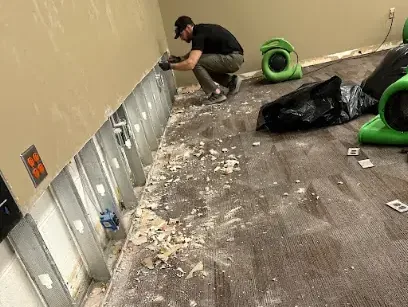
What a proper structural drying and dehumidification job includes
Water damage is a drying problem first. The restoration team measures, extracts and dries to a reading, then records each step so the claim file holds up.
Dispatch at any hour
Active water is treated as urgent around the clock, weekends and holidays included, because drywall and subfloor keep soaking while water sits.
Dried to the IICRC S500 standard
Air movers and LGR dehumidifiers are sized to the class of loss, and materials are dried to within 2 to 4 points of a dry reference.
A claim file from the first visit
Moisture maps, daily psychrometric logs and timestamped photos taken before any demolition go into one file for the adjuster.
Planned for Piedmont houses
Crawl spaces over red clay, older mill houses and manufactured homes each dry differently, so the plan starts from how the house is built.
First steps for structural drying and dehumidification
- Map the moisture
Meters and thermal imaging mark which floors, walls and ceilings are wet.
- Set the equipment
Air movers and dehumidifiers are placed by water class and the materials in the room.
- Monitor each day
Readings are logged, and the equipment is moved or reduced as areas dry.
- Confirm dry standard
Final readings are compared with dry material nearby before the equipment is removed.
What does structural drying and dehumidification cost in Forest City, SC?
Drying cost depends on the water class, how many rooms are wet and the type of materials. A single area with a light class is the low band, while a whole floor with dense materials reaches the high band.
Class 1 or 2, one area
- Moisture mapping
- A few air movers
- One dehumidifier
Class 3, several rooms
- Wall and ceiling drying
- More equipment
- Daily readings
Class 4 or a whole floor
- Dense material drying
- Specialty equipment
- Extended monitoring
Ranges are typical, not a quote. Water category, square footage, material class and how fast drying started move the number most. Try the water damage cost calculator for a closer range.
How structural drying and dehumidification is handled, step by step
- 1
Map
Meters and thermal imaging mark the wet zones.
- 2
Place
Air movers and dehumidifiers go in by class.
- 3
Track
Readings are logged each day.
- 4
Finish
Equipment leaves when materials match dry.
Removing the water is only half the job. Wood, drywall and concrete hold moisture long after the puddles are gone, and that trapped water is what causes warping, swelling and odor. Structural drying uses controlled airflow and dehumidification to pull it out, with meters showing the progress each day. Drying also reaches places the eye cannot, which matters after a burst pipe or a storm, such as the bottom of a wall cavity or the space between a subfloor and the flooring above it.
How the drying is planned
- Water class and material type set the number of air movers
- Dehumidifiers lower the humidity so moisture leaves the materials
- Meters track wood, drywall and concrete separately
- Equipment is moved and adjusted as the readings fall
Surface dry but still damp inside? Ask the crew what the meters show.
(888) 532-8921Book a drying checkHistoric buildings in town
The Main Street Historic District was listed on the National Register of Historic Places in 2002, the East Main Street district in 2005, the West Main Street district in 2006 and the Alexander Manufacturing Company Mill Village in 2008. Buildings in these districts are part of the local mix, and drying them calls for patience so trim, plaster and flooring are not rushed.
Why closed windows matter
Drying works best in a sealed space where the dehumidifier controls the humidity. Opening windows lets outside moisture back in and slows the process, so the crew keeps doors and windows closed while the equipment runs.
Structural drying and dehumidification across Forest City and nearby towns
Structural drying covers buildings across Forest City and the 28043 ZIP, including those in the Main Street, East Main Street and West Main Street historic districts, plus neighboring Spindale and Bostic.
The same service nearby: structural drying and dehumidification in Gaffney, Shelby, Spartanburg.
Water damage restoration in Forest City · every town covered
Related water damage services in Forest City
Common questions about structural drying and dehumidification
Why not just open the windows and use fans?
Open windows let humid air back in, and box fans only move air without removing moisture. Dehumidifiers and air movers working in a closed space pull water out of the materials.
What do the water classes mean?
Class one is the least water in low-absorbing materials, and class four is deeply held water in dense materials such as hardwood or concrete. The class sets the amount of equipment.
How do you know when a building is dry?
A meter compares readings in the wet area with readings from the same material in an unaffected room. When they match, the structure is dry and the equipment can come out.
Does drying prevent mold?
It lowers the risk by taking away the moisture that mold needs. Starting within 24 to 48 hours of the loss gives the best chance of keeping the damage small.
Is drying needed even when no water is visible?
Yes. Wall cavities, subfloors and insulation can hold water that the surface hides. Meters find the wet material, and the crew dries it before it causes warping or odor.
Do historic buildings dry differently?
The method is the same, but the pace is gentler on historic trim, plaster and flooring. The crew monitors each material and avoids drying too quickly, which can crack or warp it.
Dry what you cannot see
Tell the team how much water got in, which rooms and materials are wet, and how long ago it happened. That sets the water class and the equipment plan.
(888) 532-8921Forest City structural drying help