Water Extraction and Removal in Shelby, NC
Standing water in a Shelby living room, kitchen or garage keeps soaking into floors and walls the longer it sits. The extraction crew pulls it out first, then checks what stayed wet.
(888) 532-8921Call now to get the pumps going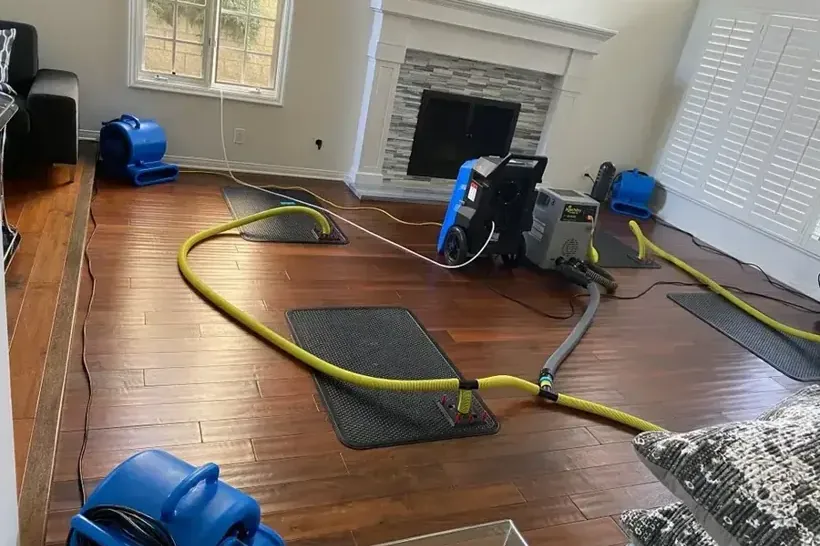
What a proper water extraction and removal job includes
Water damage is a drying problem first. The restoration team measures, extracts and dries to a reading, then records each step so the claim file holds up.
Dispatch at any hour
Active water is treated as urgent around the clock, weekends and holidays included, because drywall and subfloor keep soaking while water sits.
Dried to the IICRC S500 standard
Air movers and LGR dehumidifiers are sized to the class of loss, and materials are dried to within 2 to 4 points of a dry reference.
A claim file from the first visit
Moisture maps, daily psychrometric logs and timestamped photos taken before any demolition go into one file for the adjuster.
Planned for Piedmont houses
Crawl spaces over red clay, older mill houses and manufactured homes each dry differently, so the plan starts from how the house is built.
First steps for water extraction and removal
- Stop the source
Shut off the supply or block the intake so no more water arrives.
- Set the pumps
Pumps and wet vacuums start at the lowest point and work outward.
- Lift soaked materials
Wet pad and loose flooring come up so the subfloor can be reached.
- Read the moisture
Meters map what stayed wet before the drying team takes over.
What does water extraction and removal cost in Shelby, SC?
Water extraction in Shelby usually runs from $1,200 for one room caught early to $15,000 or more when the water is contaminated or covers a whole floor. Depth, size and how long the water sat set the price more than anything else.
One room, caught early
- Wet vacuum pass
- Pad lift if needed
- Moisture readings
Several rooms or the crawl space
- Pump-out at low spots
- Carpet and pad removal
- Wall base checks
Whole floor or contaminated water
- Heavy pump-out work
- Debris and soil removal
- Material tear-out
Ranges are typical, not a quote. Water category, square footage, material class and how fast drying started move the number most. Try the water damage cost calculator for a closer range.
How water extraction and removal is handled, step by step
- 1
Call
Describe the water and where it stands.
- 2
Extract
Pumps and wet vacuums clear the low spots first.
- 3
Check
Meters map wet floors and wall bases.
- 4
Hand off
Drying equipment goes where readings stay high.
Cleveland County averages about 48 inches of rain a year, and Hurricane Helene on September 27, 2024 brought heavy rain and strong wind through the county. Water that enters a house, whether from a storm, a failed hose or a backed-up drain, keeps spreading until it is pumped out. The extraction crew works from the lowest point outward, because the water on top of the floor is the easy part and the water in the pad and wall bottoms is what does lasting harm.
What extraction handles
- Shallow water on tile, vinyl and sealed floors goes up with wet vacuums and small pumps.
- Soaked carpet and pad are lifted once the water has gone through the surface.
- Deeper pooling in garages and utility rooms is pumped from the lowest spot first.
- Moisture readings on walls and subfloors show where water is still hiding.
Water still standing on the floor? Call now, any hour, and describe what is wet.
(888) 532-8921Talk through the pump-outWhen the water came from outside
Piedmont clay drains slowly, so a soaked yard can send runoff toward doors, garage slabs and low rooms. Water from rain or a stormwater problem can carry soil and debris, which is why the crew handles it more carefully than a clean supply leak. Bigger events are covered under storm and flash flood cleanup.
After the pump-out
Pumping is only the first stage. Once the surface water is gone, the crew checks the floor, baseboards and wall bottoms with moisture meters and marks what is still wet. Materials that cannot dry in place, such as saturated pad, come out so the structure can dry properly through structural drying.
Water extraction and removal across Shelby and nearby towns
Extraction work runs across Shelby, from Uptown and the Central Shelby Historic District to the streets around U.S. Route 74 and South Lafayette Street, in ZIP codes 28150, 28151 and 28152.
The same service nearby: water extraction and removal in Gaffney, Kings Mountain, Forest City.
Related water damage services in Shelby
Common questions about water extraction and removal
How soon does standing water need to come out?
As early as possible. Water spreads into pad, baseboards and the bottoms of walls the longer it sits, and damp materials can start growing mold within a day or two. Call now, any hour, so pumping begins before the damage widens.
Can a household vacuum handle standing water?
For a small puddle on sealed flooring it can. Once water has reached carpet pad, a subfloor or a wall base, a household vacuum leaves most of the moisture behind, and only meters show what remains.
Does extraction include drying?
Extraction removes the liquid water. Drying is the next stage, with air movers and dehumidifiers running until readings return to normal. The two are planned together so no gap is left between them.
What if the water came from outside?
Runoff and creek overflow can carry soil and debris. The crew treats it with more caution than clean supply water, may remove more porous materials, and sorts the work by what the water touched.
Will the carpet have to be removed?
Not always. Clean water caught early can leave carpet and pad worth drying in place. Saturated pad, or water that was dirty, usually means the pad goes and the carpet is lifted.
Should the power stay on in a wet room?
If water reached outlets or low wiring, the circuit should stay off until it is checked. After Hurricane Helene, Cleveland County Building Inspections helped residents assess damaged electrical equipment, and the same caution applies to any wet outlet.
Get the water off the floor
The extraction crew, the drying team and local water damage pros cover each stage in order, from the first pump to the last meter reading.
(888) 532-8921Call about the wet floor