Structural Drying and Dehumidification in Shelby, NC
Once the standing water is gone, the rest of the moisture is inside framing, subfloors and wall cavities. The drying team places air movers and dehumidifiers and tracks readings until the building returns to normal.
(888) 532-8921Call now to start the drying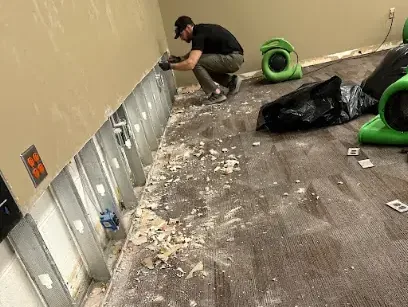
What a proper structural drying and dehumidification job includes
Water damage is a drying problem first. The restoration team measures, extracts and dries to a reading, then records each step so the claim file holds up.
Dispatch at any hour
Active water is treated as urgent around the clock, weekends and holidays included, because drywall and subfloor keep soaking while water sits.
Dried to the IICRC S500 standard
Air movers and LGR dehumidifiers are sized to the class of loss, and materials are dried to within 2 to 4 points of a dry reference.
A claim file from the first visit
Moisture maps, daily psychrometric logs and timestamped photos taken before any demolition go into one file for the adjuster.
Planned for Piedmont houses
Crawl spaces over red clay, older mill houses and manufactured homes each dry differently, so the plan starts from how the house is built.
First steps for structural drying and dehumidification
- Map the moisture
Meters and thermal checks mark every wet surface.
- Place the equipment
Air movers and dehumidifiers go where the readings call for them.
- Read it daily
The same spots are measured each visit and logged.
- Adjust and finish
Equipment is moved or removed as readings reach the dry target.
What does structural drying and dehumidification cost in Shelby, SC?
Structural drying in Shelby typically costs from $1,200 for light moisture in one area to $15,000 or more for deep saturation across a whole floor. Material type, how wet the structure is and how many rooms need equipment decide the price.
Light moisture, one area
- Moisture mapping
- A few air movers
- Daily readings
Heavier moisture, several rooms
- Dehumidifier placement
- Wall cavity drying
- Multi-room readings
Deep saturation or a whole floor
- Full equipment setup
- Containment sheeting
- Extended monitoring
Ranges are typical, not a quote. Water category, square footage, material class and how fast drying started move the number most. Try the water damage cost calculator for a closer range.
How structural drying and dehumidification is handled, step by step
- 1
Assess
Meters mark wet and dry zones.
- 2
Set up
Equipment goes in at the wettest points.
- 3
Monitor
Readings are logged at each visit.
- 4
Finish
Equipment is pulled when the target is met.
Drying is not guesswork. After water is extracted, the drying team places equipment based on what the meters show, then returns to read the same spots until they match the dry reference points taken elsewhere in the building. Shelby has three National Register historic districts, Central Shelby, West Warren Street and East Marion-Belvedere Park, so older buildings are part of the local stock, and older framing and wall finishes can hold moisture longer.
What goes into a drying setup
- Air movers that push dry air across floors, walls and open cavities.
- Dehumidifiers that pull moisture out of the air so it does not return.
- Moisture meters and thermal readings that find damp spots out of sight.
- Containment sheeting to keep wet areas from drying the rest of the house.
Surface dry but not sure about the walls? Call now, any hour, for a moisture check.
(888) 532-8921Dry behind wallsWhy readings, not guesses
A wall can feel dry and still hold water in the lower cavity. Readings taken at the same spots each visit show whether the structure is actually drying. When they stop falling, the equipment is adjusted or moved. When they match the dry reference, the job is done.
Equipment, not time, decides the finish
No set number of days applies to every job. Material, depth of the water and building age all change how long drying takes. After a leak is extracted, water extraction hands the room over, and a major event may also involve storm and flash flood cleanup.
Structural drying and dehumidification across Shelby and nearby towns
Drying work serves Shelby, from Uptown and the Central Shelby Historic District to buildings in the East Marion-Belvedere Park Historic District, in ZIP codes 28150, 28151 and 28152, wherever readings show moisture still trapped.
The same service nearby: structural drying and dehumidification in Gaffney, Kings Mountain, Forest City.
Related water damage services in Shelby
Common questions about structural drying and dehumidification
How does the team know the building is dry?
By comparing readings in the wet area with reference readings from a dry part of the same building. When the numbers match, the structure is dry and the equipment can be removed.
Why do dehumidifiers run along with air movers?
Air movers lift moisture from surfaces into the air, and dehumidifiers pull it out of the air. Without both, the moisture just moves around the room and soaks back in.
Can wet framing really dry in place?
Often yes. Solid framing and subfloors can dry with the right airflow and a dry room, which is far less disruptive than tearing them out and rebuilding.
Will the equipment be loud?
Air movers and dehumidifiers hum steadily, a bit like several large fans. Most people get used to it, and the equipment is placed to keep sleeping areas as quiet as possible.
What if the readings stop dropping?
The team changes the setup: moving air movers, opening a wall cavity or adding dehumidifiers. A reading that stalls usually means moisture is still trapped somewhere nearby.
Is drying needed even if the carpet looks fine?
Yes. Water can sit in the subfloor and wall base long after the surface looks normal. Drying checks those hidden layers before they cause damage or mold.
Dry what you cannot see
The drying team, the mitigation team and local water damage pros set the equipment and track the readings until everything reads dry.
(888) 532-8921Call about the drying