Structural Drying and Dehumidification in Kings Mountain, NC
Water that has soaked into floors, walls and framing does not leave on its own. The drying team places air movers and dehumidifiers by moisture readings and logs them until the structure is dry.
(888) 532-8921Walls still damp? Call to start drying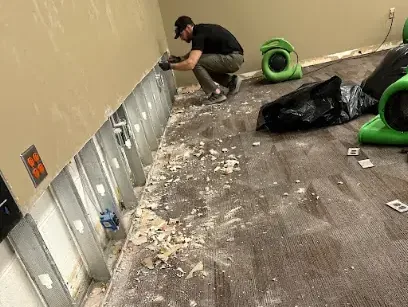
What a proper structural drying and dehumidification job includes
Water damage is a drying problem first. The restoration team measures, extracts and dries to a reading, then records each step so the claim file holds up.
Dispatch at any hour
Active water is treated as urgent around the clock, weekends and holidays included, because drywall and subfloor keep soaking while water sits.
Dried to the IICRC S500 standard
Air movers and LGR dehumidifiers are sized to the class of loss, and materials are dried to within 2 to 4 points of a dry reference.
A claim file from the first visit
Moisture maps, daily psychrometric logs and timestamped photos taken before any demolition go into one file for the adjuster.
Planned for Piedmont houses
Crawl spaces over red clay, older mill houses and manufactured homes each dry differently, so the plan starts from how the house is built.
First steps for structural drying and dehumidification
- Stop new water
Fix or shut off the source so drying can make progress.
- Keep doors closed
Once equipment runs, keep doors and windows shut so the dehumidifiers work on the room.
- Leave the equipment alone
Keep machines plugged in and running until the meter says the materials are dry.
- Keep a record
Note the date equipment started and photograph wet areas.
What does structural drying and dehumidification cost in Kings Mountain, SC?
In Kings Mountain, structural drying usually costs between $1,200 and $15,000 or more. The number of wet rooms, the materials involved and the days the equipment runs set the final figure, and thick framing takes longer than drywall.
Class 1 or 2, one area
- Light moisture mapping
- Air movers placed
- Dehumidifier running
Class 3, several rooms
- Walls opened
- Subfloor dried
- Daily readings
Class 4 or a whole floor
- Dense materials dried
- Long equipment runs
- Frequent readings
Ranges are typical, not a quote. Water category, square footage, material class and how fast drying started move the number most. Try the water damage cost calculator for a closer range.
How structural drying and dehumidification is handled, step by step
- 1
Map
Meters show which materials are wet.
- 2
Place
Air movers and dehumidifiers are set by the readings.
- 3
Monitor
Readings are taken on every visit.
- 4
Release
Equipment comes out once materials read dry.
Extraction removes the water that can be seen. Structural drying removes the moisture that cannot: the water held in subfloor, studs, plates and drywall. It is controlled with equipment and measured with a meter, and it is the step that keeps a wet building from turning into a rot and mold problem.
How drying is planned
- Moisture readings map which materials are wet and how wet.
- Air movers are placed along wet walls and floors to speed evaporation.
- Dehumidifiers pull that moisture from the air and collect it.
- Readings repeat each visit, and equipment moves or leaves as areas reach dry.
Walls, floors or framing still wet? The drying team sets up and tracks the equipment.
(888) 532-8921Start the dryingLocal conditions
Cleveland County sits in the Piedmont belt on principally clay soil and gets about 48 inches of annual rainfall, so many wet jobs begin with damp ground and humid air. Older homes and buildings are part of the stock in the Central School Historic District, the West End Historic District and the Margrace Mill Village Historic District, and drying older materials takes patience and steady readings.
How much equipment runs
Drying jobs are sorted by how much water the materials absorbed, from a single wet area to a whole floor with saturated framing. The class sets how much equipment runs and for how long. Follow-on work links with water extraction and storm and flash flood cleanup. The owner receives the dated readings for the insurance file.
Structural drying and dehumidification across Kings Mountain and nearby towns
Structural drying work in Kings Mountain covers ZIP code 28086, including homes and buildings in the Central School Historic District, the West End Historic District and the Margrace Mill Village Historic District and along the Interstate 85 corridor.
The same service nearby: structural drying and dehumidification in Gaffney, Shelby, Forest City.
Water damage restoration in Kings Mountain · every town covered
Related water damage services in Kings Mountain
Common questions about structural drying and dehumidification
How do you know when a building is dry?
A moisture meter reads each material and the numbers are compared with a dry reference. Equipment stays until the wet areas match, not until a calendar date.
Why run dehumidifiers and not just fans?
Fans move air and speed evaporation, but without dehumidifiers the moisture only raises humidity in the room. Dehumidifiers remove it so it cannot settle back into drywall and wood.
Is it safe to live in the home during drying?
Usually in the dry rooms. The machines are loud and warm, so many households stay elsewhere for a night or two, especially when bedrooms are affected.
How long does structural drying take?
Most jobs run for several days. Thick framing, subfloor and wet insulation need longer than drywall, and daily readings decide when the equipment can leave.
Will drying prevent mold?
Fast, complete drying removes the damp conditions mold needs, but a material that stays wet beyond a day or two can still grow it. Readings, not appearances, decide.
What does structural drying cost?
Jobs commonly run from $1,200 to $15,000 or more, based on the class of loss, the rooms affected and the days of equipment.
Wet building? Get it measured and dried
Moisture left in framing causes swelling, odors and rot. The crew places equipment, reads the meters daily and removes it only when dry.
(888) 532-8921Set up the drying equipment