Commercial Water Damage in Spartanburg, SC
When water reaches an office, storefront, clinic or campus building, every wet day costs money. The extraction crew and the drying team work in stages so the unaffected part of the building can stay in use.
(888) 532-8921Call about the building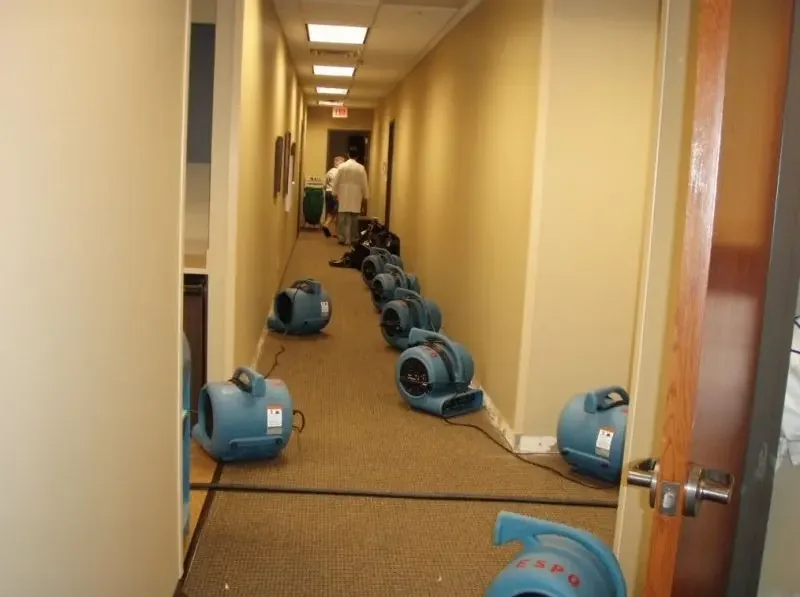
What a proper commercial water damage job includes
Water damage is a drying problem first. The restoration team measures, extracts and dries to a reading, then records each step so the claim file holds up.
Dispatch at any hour
Active water is treated as urgent around the clock, weekends and holidays included, because drywall and subfloor keep soaking while water sits.
Dried to the IICRC S500 standard
Air movers and LGR dehumidifiers are sized to the class of loss, and materials are dried to within 2 to 4 points of a dry reference.
A claim file from the first visit
Moisture maps, daily psychrometric logs and timestamped photos taken before any demolition go into one file for the adjuster.
Planned for Piedmont houses
Crawl spaces over red clay, older mill houses and manufactured homes each dry differently, so the plan starts from how the house is built.
First steps for commercial water damage
- Close the water supply
Shut the main valve or the zone valve, and secure the power.
- Move people out
Clear the wet zone of staff and customers, especially near outlets or equipment.
- Protect records
Lift files, stock and electronics off wet floors or into a dry room.
- Document everything
Photograph damage, inventory and the source for the property file.
What does commercial water damage cost in Spartanburg, SC?
Commercial water damage in Spartanburg typically costs $3,000 to $100,000 or more. A small office or storefront sits at the low end, and a warehouse or whole building with large floors and many materials costs the most.
Small office or storefront
- Water extracted
- Wet zone dried
- Readings logged
Large floor or several suites
- Zone by zone drying
- Ceiling tiles replaced
- Daily monitoring
Warehouse or whole building
- Large scale drying
- Staged work plan
- Full documentation
Ranges are typical, not a quote. Water category, square footage, material class and how fast drying started move the number most. Try the water damage cost calculator for a closer range.
How commercial water damage is handled, step by step
- 1
Secure
Water, power and the wet zones are controlled
- 2
Extract
Pumps and extractors clear the floors
- 3
Dry
Equipment runs zone by zone
- 4
Document
Readings and photos go to the property file
A flooded office or shop is more than a wet floor. Inventory, records, equipment and customers are all in the way, so the plan starts with what must stay open. The local building mix runs from storefronts on Morgan Square to Chapman Cultural Center, the Beaumont Mill offices, hospital campuses on East Wood Street and Skylyn Drive, college buildings and a nine floor hotel downtown, and each dries differently.
How staged drying works
- Wet zones are sealed with plastic so the rest of the building stays usable
- Pumps and extractors clear carpet, tile and concrete floors
- Ceiling tiles, insulation and soaked drywall are removed
- Air movers and dehumidifiers dry one zone at a time
Water in the shop or office? Tell the crew how large the wet area is.
(888) 532-8921Reach the building crew nowRecords and the property file
Commercial claims depend on documentation. The team keeps dated photos, room by room moisture readings and equipment logs, which property managers and carriers can follow without a site visit. That paper trail also supports tenant notices and lease questions. Clear records let repairs be scoped accurately and budgets set.
Water sources in larger buildings
Commercial water losses often come from a failed pipe, a roof opening, a sprinkler or a sewage backup. Each source has its own method, from the burst pipe service to the sewage backup service, and large floors rely on structural drying afterward.
Commercial water damage across Spartanburg and nearby towns
The crew serves businesses and institutions across the city, from Morgan Square and downtown storefronts to Chapman Cultural Center, the Beaumont Mill area, the East Wood Street and Skylyn Drive medical campuses, and the streets near Wofford College.
The same service nearby: commercial water damage in Gaffney, Union, Forest City.
Water damage restoration in Spartanburg · every town covered
Related water damage services in Spartanburg
Common questions about commercial water damage
How is a commercial job scheduled around business hours?
The crew studies the building first, then plans extraction and loud equipment for the quietest windows where possible. Entrances, restrooms and customer areas are prioritized so operations can resume sooner.
What records does a property manager receive?
Dated photos, moisture readings for each room, equipment placement notes and a scope of work. Those records support carrier questions and let tenants and owners see the progress.
Can ceiling tiles and insulation be saved?
Wet ceiling tiles and fiberglass insulation are usually replaced because they sag and hold moisture. Metal grids, concrete and many hard surfaces can be cleaned and dried, which keeps repair costs down.
Is a sewage backup in a business different?
The work is the same as at home but on a larger scale. The area is closed off, contaminated materials are removed and surfaces are disinfected before drying. Food areas and public restrooms need extra care.
How are older commercial buildings handled?
Some Morgan Square buildings date to the 1880s, and older masonry and plaster dry slowly, so airflow is introduced gradually and guided by meters rather than a fixed schedule.
Business floor flooded? Get a drying plan moving.
The crew extracts water, protects the dry areas and dries the wet zones in stages, with readings and photos kept for the property file.
(888) 532-8921Schedule commercial drying