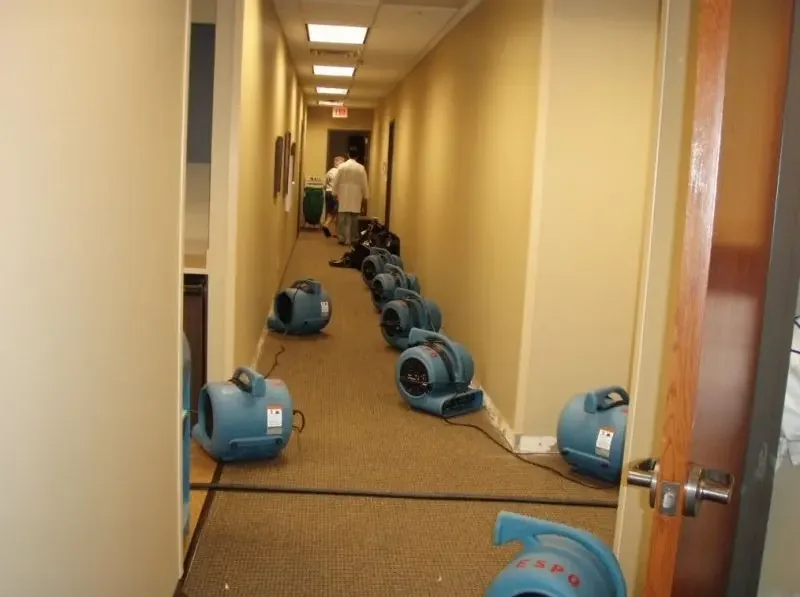
A water loss in a downtown building does not just wet the floor; it can stop a business for days. In Spartanburg, where the oldest buildings on Morgan Square date to the 1880s, the first day decides how long the doors stay shut.
Key takeaways
- Stop the water at its source, protect people and move stock, records and equipment out of the wet zone first.
- Older masonry and plaster hold water longer than newer finishes, so drying plans start with moisture mapping rather than guesses.
- Phased drying works zone by zone so part of the space can keep operating.
- Photos, a damage inventory and daily readings are the core of the insurance file.
- Know the shutoff valve locations before a loss, not after.
What water does to an older downtown building
The oldest existing buildings on Morgan Square date to the 1880s. Masonry walls, wood floors, plaster and layered finishes soak up water and give it back slowly.
A leak that would dry out in newer construction can linger in thick walls and under old floorboards. That is one reason older buildings need a documented drying plan rather than a quick fan-and-wait approach.
Where a building has a below-grade space, water collects there first and rises through the floor above. Morgan Square also sits on the western slope of a ridge that forms the border between the Tyger and Pacolet River watersheds, so heavy rain runs downhill past the storefronts toward low ground.
Wood floors that look dry on top can hold water in the boards and in the joists below.
- Brick and stone wick water up from the floor and hold it.
- Plaster and wood lath dry slowly and swell or crack when they stay wet.
- Old floors may have several layers over the original boards.
- Hidden voids behind old finishes collect moisture unseen.
The first day: protect people, stock and records
The owner's first moves are about safety and what can be saved. Water near electrical panels or outlets means the power to that area stays off until it is checked.
Stock and records come first because drying cannot replace them. Paper, fabric and electronics go onto raised shelves or out of the building.
- Shut off the water at the source, or at the main if the source is unknown.
- Turn off power to wet areas from a dry position.
- Move stock, files, laptops and art off the floor and out of the wet zone.
- Photograph the damage before anything is moved, and again afterward.
- Write down the time the loss was found and what was done.
Stop the source and isolate the wet zone
A supply failure, a roof leak and a drain overflow need different fixes, but all three start by stopping the water. Once the source is closed, the crew marks the wet zone and keeps it from spreading.
In a multi-tenant building, a leak above can drip into a neighbor below. Early contact with the building owner and the neighbor keeps the scope clear.
Tenants above and below, the building owner and the insurer are told right away, in writing where possible.
Phased drying that keeps doors open
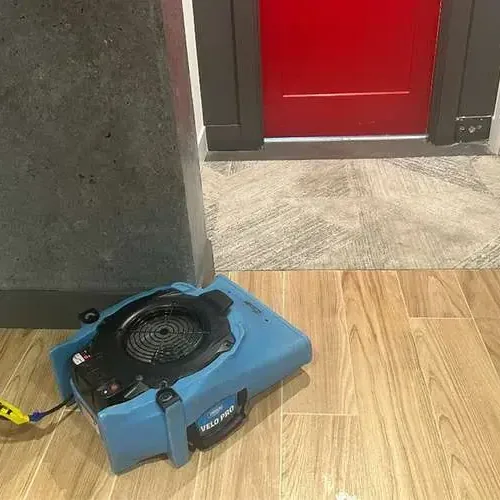
Commercial drying is done in phases. The crew dries the worst zone first while the rest of the space keeps working, then moves the equipment as the readings fall.
That approach is the heart of commercial water damage work, and it ties directly to the moisture readings behind structural drying. The aim is less downtime, not a quicker fan.
Containment keeps moisture out of the open zone. Plastic sheeting marks the boundary, dehumidifiers work on the wet side and a clear route stays open for customers on the dry side.
- Zones set by the moisture map, not by room names.
- Equipment placed to leave aisles and doorways clear.
- Noisy work scheduled around business hours where it can be.
- Readings repeated daily until each zone reaches a dry reference.
Different buildings, different drying plans
Downtown Spartanburg has a mix of building types, and each one calls for its own plan.
Shops and galleries
Retail floors and display areas need quick protection for stock and fixtures. Finishes that touch the floor, such as base trim and cabinets, are checked first.
Merchandise on shelves along exterior walls is usually the first at risk, since walls carry moisture upward.
Offices and records
Spartanburg Regional Healthcare bought the Beaumont Mill and moved its billing and medical records there. A building that holds paper and data has to protect them before anything else is dried.
Records are moved out of the wet area, and the drying plan is set around them.
Large venues and hotels
Chapman Cultural Center is a three-building complex that opened in October 2007 and houses the Spartanburg Art Museum and the Spartanburg County Regional History Museum. A nine-floor, 240-room Marriott hotel is among the new downtown developments.
Larger buildings are dried floor by floor or wing by wing so the rest can remain in use.
Many rooms can sit stacked above a leak, and a leak on an upper floor can move through floors and ceilings below. The crew traces it down the building floor by floor.
Documentation, downtime and the insurer
Insurers look for proof of the loss and of the steps taken. Photos, an inventory of damaged goods and the daily drying logs make the file.
Business income and downtime are separate questions that depend on the policy. Keeping a note of closed days and lost sales helps when the claim is reviewed.
Staff, customers and neighbors should be told what is happening and when the doors reopen. A sign on the door limits confusion.
- Photos and video of the loss before cleanup.
- An inventory of damaged stock, equipment and finishes.
- Daily drying readings from the restoration team.
- A log of days closed and hours lost.
Getting ready before the next loss
A little preparation shortens the first day. Knowing where the shutoff valves are and who holds the keys saves time when a pipe lets go.
- Label the main shutoff and floor valves and tell staff where they are.
- Keep a list of tenants, owners and the building manager.
- Keep the names and numbers of the building manager, the insurer and the plumber in one place.
- Store key records off the floor and, where possible, off site.
- Note the electrical panel location for quick power shutoff.
- For the wider scope in any commercial setting, see the main page on commercial water damage.
Questions
What should a business owner do first after a water loss?
Stop the water at the source, turn off power to wet areas, move stock and records out of the wet zone and photograph the damage.
Can part of a building stay open during drying?
Often yes. Phased drying works zone by zone, and equipment is placed to keep aisles and doorways clear.
Why do older buildings take longer to dry?
Masonry, plaster and layered floors hold water and release it slowly, so the plan starts with moisture mapping.
What does an insurer usually want to see?
Photos of the loss, a damage inventory, the drying logs and a record of days closed and lost sales.
How can an owner prepare before a loss?
Label the main shutoff and floor valves, keep a contact list and store key records off the floor.