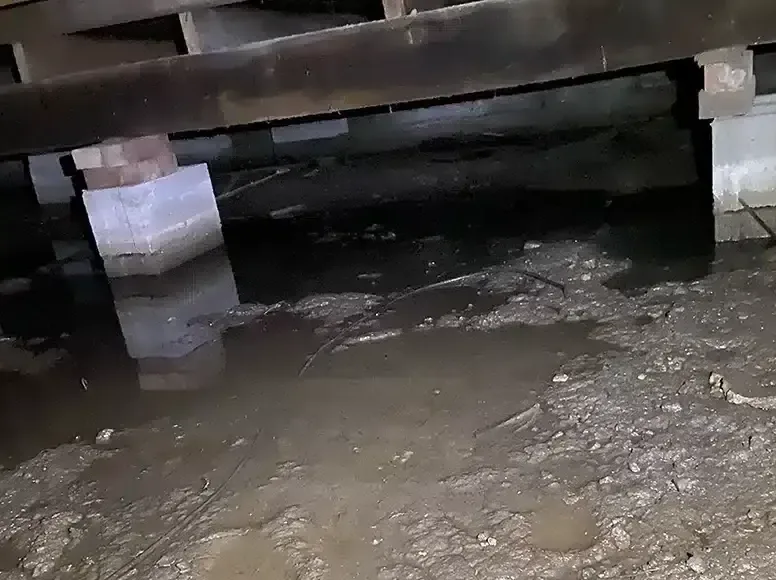
Rain does not stop at the foundation in Shelby, where Cleveland County averages about 48 inches a year on soil that is principally clay. After a heavy storm, water can sit under a raised floor for days.
Key takeaways
- Standing water under a floor and damp air under a floor are different problems, and a flashlight check from the access panel tells them apart.
- Clay soil drains slowly, so a crawl space can stay wet long after the rain has stopped.
- Hurricane Helene on September 27, 2024 brought heavy rain and strong wind to Cleveland County, and one storm like it can fill a space under a house.
- The water on the ground is pumped out first, then wet insulation, joists and sills are dried or replaced.
- No one can say from the street which homes have crawl spaces, so each house is checked on its own.
Standing water or damp air: how to tell
Damp air smells earthy and leaves a film on surfaces, but the ground is only moist. Standing water is visible: a pool, a shine on the soil or a wet trail running toward low spots.
A flashlight from the access panel is usually enough to tell the difference, and a photo gives the restoration team a first look before anyone crawls in.
Humidity alone is a smaller problem. It can usually be handled with ventilation, a dry ground cover and time.
Standing water is a drainage and removal job, and it will not leave by itself.
- Pools of water or mud on the ground, or a shine on the soil.
- Insulation hanging down, soaked or sagging between the joists.
- Water stains on the sills and the lower edge of the floor framing.
- A musty smell in the house that grows stronger after rain.
- Soft spots in the floor above, especially near the exterior walls.
Why clay soil and 48 inches of rain matter
Cleveland County lies in the Piedmont belt, where the soil is principally clay. Clay takes in water slowly, so rain often runs along the surface toward the lowest ground, which is often the space under a house.
With about 48 inches of rain a year, there is plenty of chance for that to happen. Storms like Hurricane Helene on September 27, 2024 pack a lot of that rain into a short stretch.
Grading, hard-packed ground and the way a lot slopes can also hold water in pockets, so two houses on the same street do not always behave alike. That is why a crew checks the actual space rather than relying on a general rule.
Creeks, storm drains and runoff in the area
Hickory Creek drains the eastern half of Shelby, and Buffalo Creek is one of the large creeks in Cleveland County, running the length of the county. Almost all of the county sits in the Broad River Basin.
The City of Shelby has a Stormwater Division, and heavy runoff has to go somewhere. Where gutters and grading send it toward the house, the crawl space is the low spot.
A heavy storm adds water to every one of these paths at once, and the crawl space sits at the end of them.
- Downspouts that end at the foundation push roof water toward the house.
- Soil that slopes toward the walls sends surface water under the floor.
- Clogged gutters overflow at the corners and soak the ground beside the footing.
Pump-out and removing wet materials
The first job is to pump the standing water out, working from the deepest spot. Wet insulation that has dropped or soaked through comes out next, since it holds water against the floor above.
That work is crawl space water removal, and the water itself falls under water extraction for the pump-out and any water that has reached the rooms above.
After the water is gone, the crew inspects the ground cover and the sills for the path the water took. Knowing where it entered shows whether the cause is surface runoff, a roof drain or a plumbing leak.
- Standing water pumped out and the low spots checked again after the pump runs.
- Soaked insulation removed in sections and bagged.
- Ground cover and any vapor sheeting inspected for tears and pooling.
- Visible mud and debris cleared from the work area.
Drying joists, sills and the subfloor
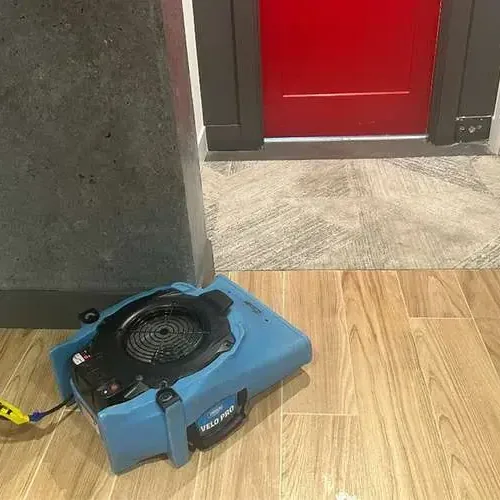
Wood under a house holds moisture longer than most people expect. The drying team uses a moisture meter on joists, sills and the subfloor, and repeats the readings until they match a dry reference.
Fans and dehumidifiers go in through the access panel, and the readings decide when they come out. Wet wood left alone invites mold and, over time, rot.
Joists and sills that stay damp lose strength slowly and can carry moisture into the floor above. Subfloor that has cupped or darkened is checked with the meter and probed for softness.
A reading taken once is only a snapshot. The drying team returns to the same spots on each visit, so a falling number is visible and a stalled number is caught early.
After the storm: documents and the next rain
Photos of the water, the insulation and the sills help with the insurance file. A mark at the high waterline shows how deep the water got.
Insurers often ask when the water first appeared. A dated photo from the access panel settles that better than memory does.
The next rain is the real test. Checking the access panel after a storm costs five minutes and catches a problem early.
A crawl space water check can help a household sort out what it is seeing.
- Photograph the water, the insulation and the sills before cleanup begins.
- Mark the waterline on a post or footing with chalk.
- Aim downspouts well away from the foundation.
- Look again after the next heavy rain.
Mistakes that make a wet crawl space worse
A few well meant steps backfire. Sealing the vents while the ground is wet traps moisture, and running a household fan in the house does little for the space below.
- Closing off ventilation while the soil is still wet.
- Leaving wet insulation in place because it looks dry on top.
- Using a household vacuum on standing water.
- Entering a space with standing water near wiring or a water heater.
- Waiting for the next rain to see whether the problem comes back.
Questions
How can a homeowner tell if the crawl space has standing water?
Look from the access panel with a flashlight for pools, a shine on the soil or soaked insulation. Damp air alone leaves a film and a smell, but no puddles.
Why does clay soil make the problem worse?
Clay takes in water slowly, so rain runs along the surface toward low ground. A crawl space is often the lowest point next to the house.
Does every Shelby home have a crawl space?
No one can say that from the street. Each house has its own foundation, which is why the crew checks the actual space.
Does wet insulation have to be removed?
Insulation that has soaked through or dropped usually comes out, because it holds water against the floor above and does not dry well in place.
How does the crew know the wood is dry?
Moisture meter readings on the joists, sills and subfloor are compared with a dry reference and repeated until they match.
What can reduce the chance of water coming back?
Clean gutters, downspouts that end well away from the walls and soil that slopes away from the foundation all keep roof and surface water out of the space.