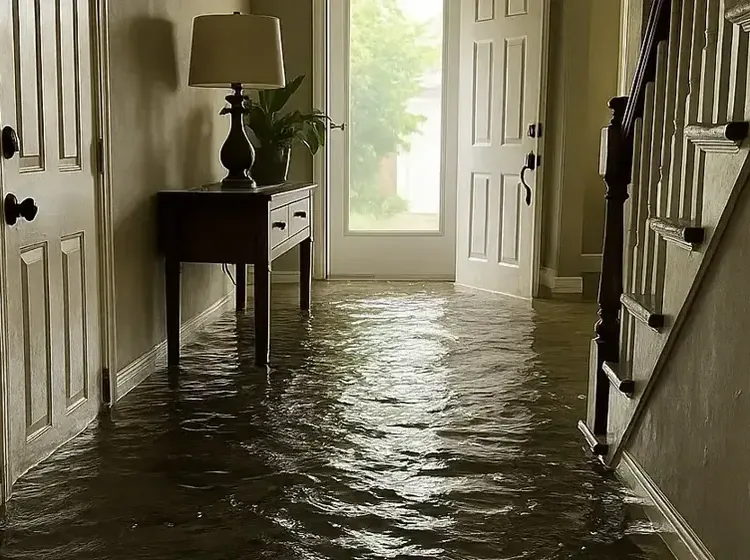
River water does not behave like rain. When Hurricane Helene's flooding along the Broad River reached parts of Rutherford County in September 2024, including Forest City, it left silt, contamination and soaked framing behind.
Key takeaways
- River flood water is contaminated, so porous materials that it touched are removed rather than dried.
- Helene flooding along the Broad River reached Rutherfordton, Forest City and Mooresboro, and the Lake Lure and Chimney Rock areas saw severe damage.
- Drying covers framing, subfloor and sheathing, with daily readings until they match a dry reference.
- FEMA funding announced in August 2026 supports voluntary buyouts of Helene-damaged properties in Rutherford County, so records matter whichever path a household chooses.
- Photos, dates and drying readings are worth keeping, because insurers and emergency management both ask for them.
What river water leaves behind
River flood water carries soil, silt, fuel, animal waste and sewage from far upstream. IICRC S500 treats it as Category 3 water, which sets the rules for what can be kept and what has to go.
The mud settles into every gap. It works into wall cavities, under cabinets and inside duct runs, and it dries into a crust that holds moisture against wood.
Contact with contaminated water is a health risk, and cuts or scrapes make it worse. That is why the first cleaning is done with protective gear.
Utilities add risk. A flooded water heater, furnace or electrical panel can fail or leak after the water recedes, and a ruined appliance can keep leaking on its own.
- Silt and mud on floors, in cavities and under cabinets.
- A film that clings to hard surfaces and has to be cleaned off.
- Water wicking up drywall, insulation and cabinet bases.
- Dampness that lingers in framing long after the visible water has left.
What Helene did in Rutherford County
Hurricane Helene flooding along the Broad River reached parts of Rutherford County including Rutherfordton, Forest City and Mooresboro. Hurricane Helene also caused severe damage in the Lake Lure and Chimney Rock areas.
A U.S. Geological Survey assessment found Rutherford among the North Carolina counties where the most damaging Helene landslides occurred. The storm hit the county through water and through the ground itself.
Recovery from an event of that size moves house by house. Each one needs its own moisture map, and the plan follows the readings rather than a calendar.
Extraction and mud removal
The extraction crew pulls standing water first, working from low spots outward. Mud and silt are shoveled and vacuumed out before they dry and harden.
This stage is the heart of storm and flood cleanup, and it moves quickly because every hour of contact lets water travel higher into the walls.
Pumps and wet-dry vacuums handle the water, and shovels and squeegees handle the mud. The order is water out, mud out, then cleaning.
Where the river left a deep layer, crews work in sections so that mud is not tracked into rooms already cleaned. Photos of each room's water mark are taken before the mud goes.
- Standing water extracted from floors, stairwells and low rooms.
- Mud, silt and debris removed from floors and cavities.
- Contents sorted into what can be cleaned and what cannot.
- Ducts, cabinets and appliances checked before any cleaning begins.
Removing what cannot be saved
Carpet and pad, lower drywall, insulation, particleboard and soaked fabric furniture that touched river water are removed. Drying does not take out what these materials absorbed.
Photos of removed materials go into the file before they are discarded. Insurers and emergency management offices commonly ask for them.
Contents are sorted into what can be cleaned and what cannot. Hard items such as dishes and tools can often be cleaned and treated, while soft items soaked in river water rarely can.
- Carpet and carpet pad that touched the water.
- Drywall and insulation in the lower part of the walls.
- Particleboard, laminate and cardboard that soaked through.
- Mattresses and upholstered furniture that cannot be cleaned and treated.
Cleaning and drying what stays
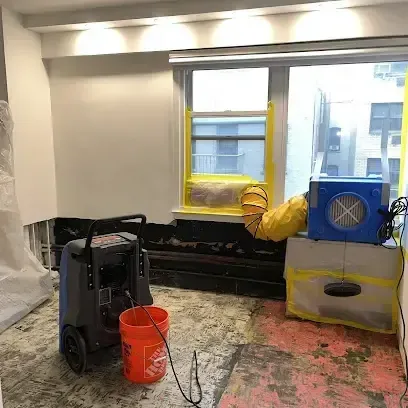
Framing, concrete and other durable surfaces are cleaned and treated before the drying equipment goes in. The drying team then measures framing, subfloor and sheathing with a moisture meter and repeats the readings every day.
The goal is to bring those materials within 2 to 4 points of a dry reference, the benchmark used in IICRC S500. That daily routine is the work of structural drying.
Wall cavities are opened at the bottom where readings stay high, so air can move through the insulation and framing. A thermal camera marks the edge of the wet area and shows when it shrinks.
Drying stalls when wet materials are left in place, which is why removal comes before equipment. A fan blowing across wet insulation and silt only moves contamination around.
- Surfaces cleaned and treated before the equipment is placed.
- Air movers and dehumidifiers placed by the room and the moisture map.
- Wall cavities opened where the readings stay high.
- Final readings recorded for the insurer.
Repair or buyout: keep the records either way
FEMA funding announced in August 2026 gives Rutherford County $10,638,923.44 to acquire and demolish 23 Helene-damaged properties. North Carolina Emergency Management says the Helene property buyouts are voluntary, and the land becomes green space after the structure is demolished.
Those 23 properties are a county total, not a count of homes in Forest City. Whether a particular property qualifies is something the county and state offices decide.
A household weighing repair against a buyout is better off with a full record: dated photos, the extraction and drying logs, and receipts. For the wider approach to flood work, see the main page on storm and flash flood cleanup.
The state and county offices run the buyout program, and the details are theirs to explain. A restoration record helps a household show what was damaged, when it happened and how it was dried.
Staying safe around river-flooded houses
Flood water hides hazards: electrical panels, sharp debris and slick mud. A house that took river water should not be entered until the power is off and the structure looks sound.
- Keep power off to flooded areas until an electrician has checked them.
- Wear boots, gloves and a mask when handling mud.
- Keep children and pets out until the first cleaning is done.
- Discard food and medicine that touched the water.
- Never mix cleaning chemicals, and keep the area ventilated.
- Have the structure checked if floors feel soft or walls lean.
Questions
Is river flood water treated differently from rain water?
Yes. River water carries soil, waste and debris, so it is treated as Category 3 and porous materials that touched it are removed.
Where did Helene flooding along the Broad River reach?
It reached parts of Rutherford County including Rutherfordton, Forest City and Mooresboro.
Why does mud have to come out quickly?
Silt dries into a crust that holds moisture against wood and drywall, which makes the drying work longer.
What do the FEMA buyouts cover?
FEMA funding announced in August 2026 supports acquiring and demolishing 23 Helene-damaged properties in Rutherford County. The buyouts are voluntary.
What records should a household keep?
Dated photos, extraction and drying logs, and receipts for emergency work. Insurers and emergency management offices both ask for them.
When can a household go back into a flooded house?
After the power is off and the structure looks sound, and with protective gear. A restoration crew can make the first cleaning safer.